
Chinese Chicken with Noodles – A Hearty, Flavorful Feast for Beginners and Beyond
Introduction
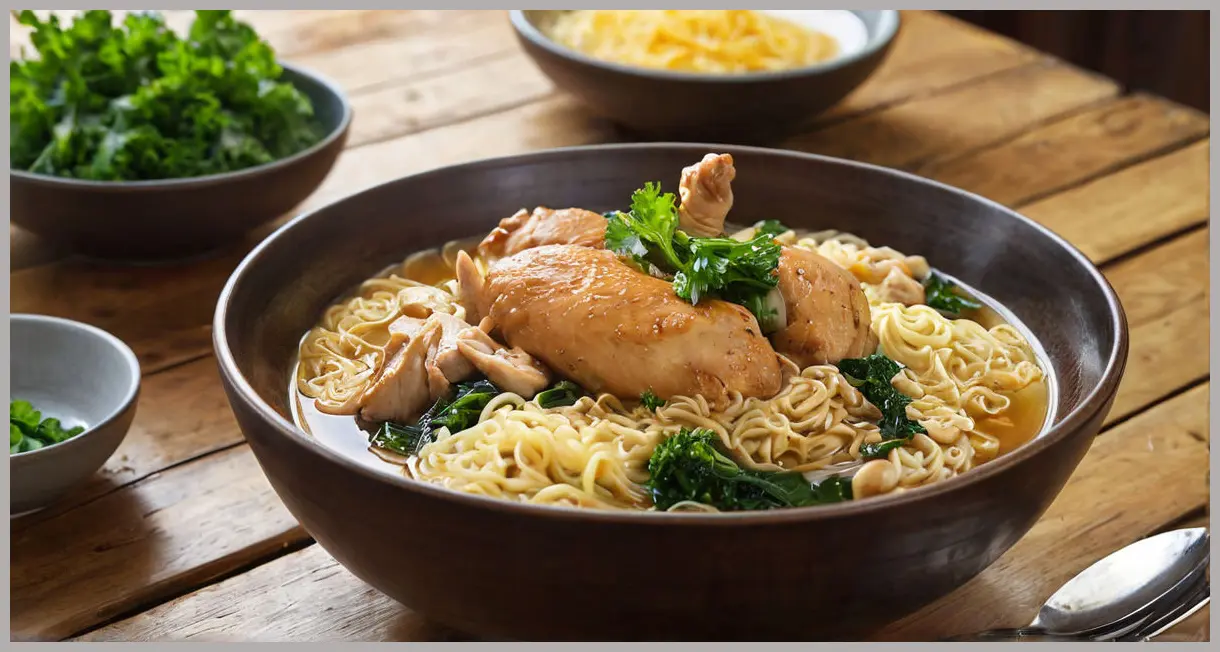
There are few dishes that embody comfort, culture, and culinary confidence as beautifully as Chinese Chicken with Noodles. This recipe is a true testament to the idea that a few high‑quality ingredients and a methodical approach can transform a simple meal into something memorable. Whether you’re a home cook looking to expand your repertoire or a seasoned enthusiast eager to master a classic, this dish offers a balanced mix of sweet, savory, and aromatic elements that will delight the palate and the soul.
The recipe is designed for a medium difficulty level, which means it will challenge you just enough to grow your skills without overwhelming you. With serves 6 and a total hands‑on time of 50 minutes plus an oven time of 1 hour 30 minutes, you’ll have ample opportunity to practice patience and precision. The result? A restorative broth, tender chicken, silky noodles, and a vibrant medley of greens—all coming together in a harmonious bowl of nourishment.
Meal Profile
| Item | Detail |
|---|---|
| Title | Chinese Chicken with Noodles |
| Difficulty | Medium |
| Portion | Serves 6 |
| Time | Hands‑on: 50 min, Oven: 1 h 30 min |
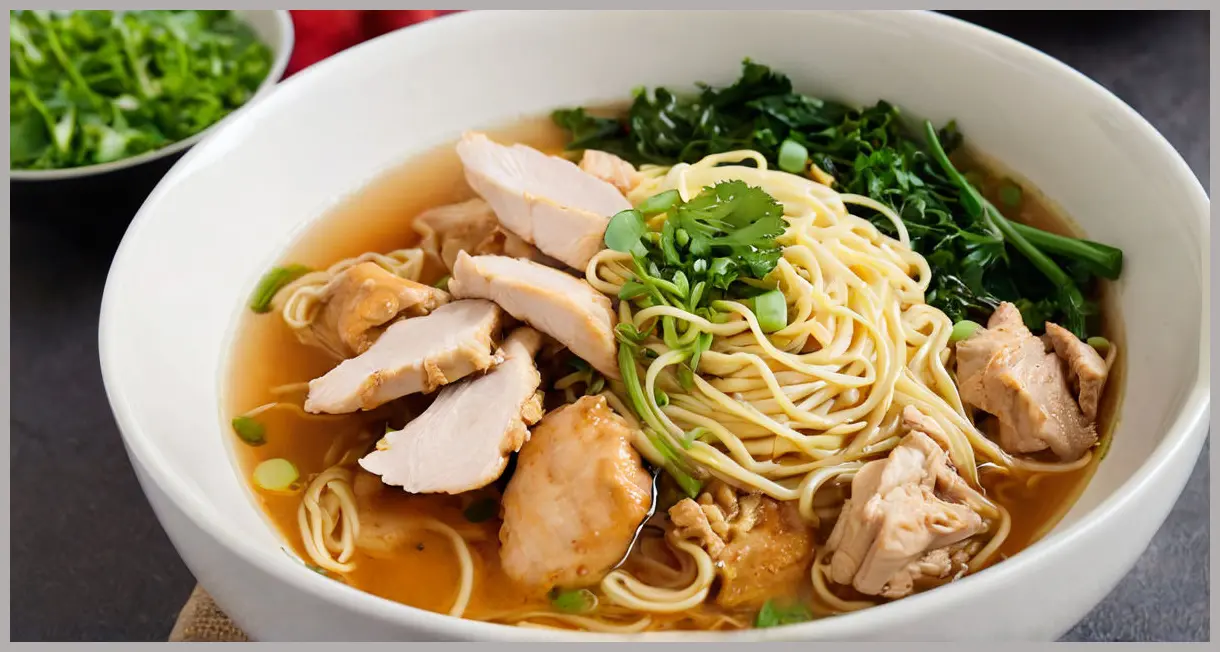
| Description | A restorative and soul‑warming broth recipe made with fresh ginger, spring onions, and the juiciest chicken. |
Why this dish stands out
- Layered flavors: The combination of sweet kecap manis, light and dark soy sauces, and a splash of sherry creates a complex umami base that’s both comforting and sophisticated.
- Texture play: The tender chicken, chewy noodles, and crisp kale provide a satisfying contrast in every bite.
- Nutrient boost: The kale and fresh coriander add vitamins and antioxidants, while the chicken supplies lean protein.
- Cultural authenticity: Using ingredients such as kecap manis (Indonesian sweet soy sauce) and star anise gives the dish a genuine Southeast Asian flair.
Ingredient Highlight
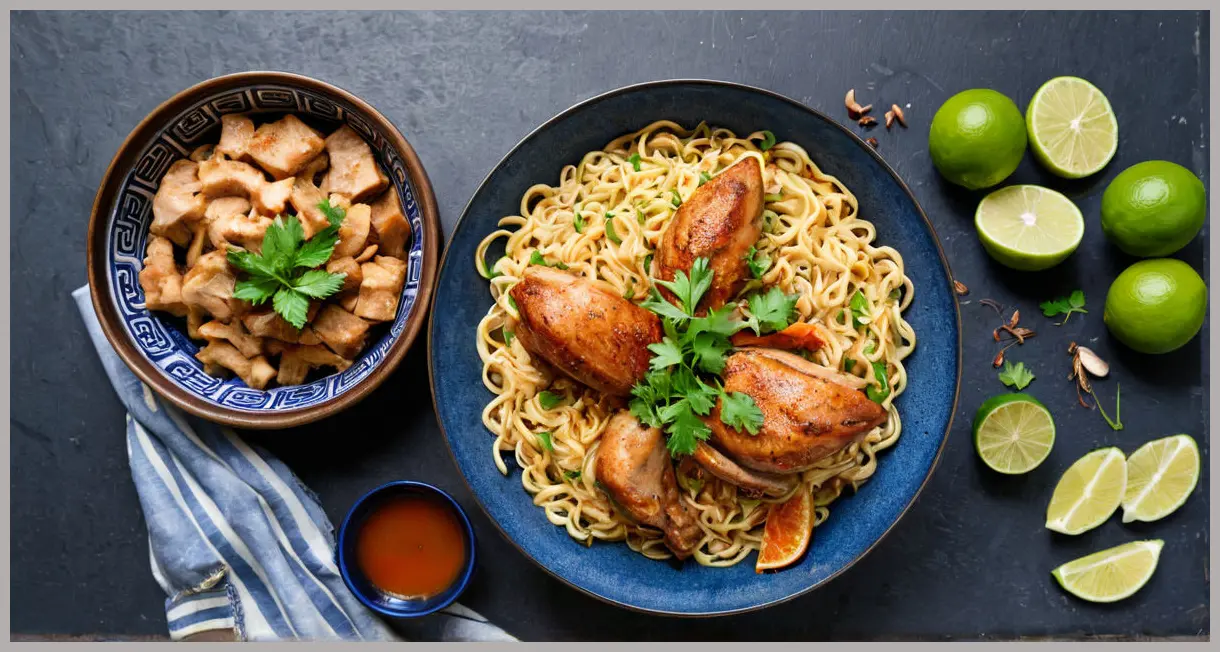
Below is a complete list of ingredients, each chosen for its role in building the dish’s signature flavor profile. Feel free to adjust quantities or substitutions based on taste preferences or dietary needs.
| Ingredient | Quantity | Purpose |
|---|---|---|
| Whole free‑range chicken (≈ 1.8 kg) | 1 | Provides the main protein and the base for the broth. |
| Kecap manis | 100 ml | Adds sweetness and depth. |
| Light soy sauce (reduced‑salt if desired) | 100 ml | Offers a lighter, salty contrast. |
| Dark soy sauce | 100 ml | Gives color and richer umami. |
| Brown sugar | 80 g | Balances the savory elements with natural sweetness. |
| Star anise | 3 | Infuses the broth with a subtle licorice note. |
| Dry sherry (e.g., fino) | 80 ml | Enhances depth and balances sweetness. |
| Fresh ginger, thickly sliced | 80 g | Brings warmth, aroma, and a gentle peppery kick. |
| Fresh chicken stock | 500 ml | Forms the base of the broth. |
| Flavourless oil | As needed | For sautéing aromatics. |
| Large onion, finely chopped | 1 | Adds sweetness and body to the sauté. |
| Garlic cloves, sliced | 3 | Contributes aromatic depth. |
| Dried fine egg noodles (Blue Dragon) | 180 g | Delivers silky texture. |
| Shredded kale | 150 g | Adds earthiness and color. |
| Spring onions, finely sliced | 4 | Provides freshness and a mild onion flavor. |
| Fresh coriander, roughly chopped (plus extra for garnish) | 1 large bunch | Adds citrusy brightness. |
| Lime wedges | For serving | Offers a zesty finish. |
Ingredient Tips
- Chicken: A free‑range or organic bird will yield a richer flavor. If you prefer a lighter broth, you can trim excess fat before cooking.
- Kecap manis: This sweet soy sauce is widely available in Asian supermarkets; if you can’t find it, a mix of soy sauce and brown sugar will work, but the flavor will differ slightly.
- Sherry: A dry sherry or even a dry white wine can be used if sherry is unavailable. The alcohol evaporates during cooking, leaving behind a subtle complexity.
- Noodles: The recipe uses fine egg noodles, but you can substitute with rice noodles or even ramen for a different texture.
Step‑by‑Step Instructions
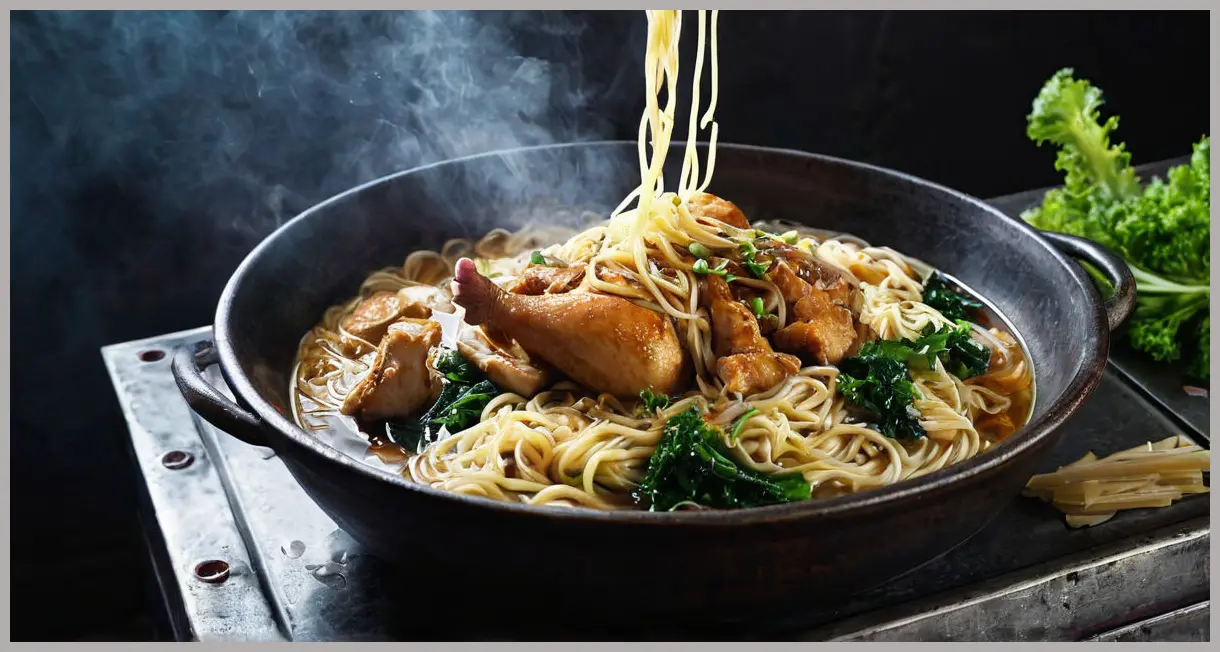
Below is a detailed, numbered guide that walks you through each stage of the recipe. Follow the steps closely, and you’ll end up with a dish that’s both comforting and impressive.
- Pre‑heat the oven to 150 °C (130 °C fan) or gas mark 2.
In a deep oven‑proof, lidded casserole that comfortably fits the chicken, combine the stock ingredients:
- 100 ml kecap manis
- 100 ml light soy sauce
- 100 ml dark soy sauce
- 80 g brown sugar
- 3 star anise
- 80 ml dry sherry
- 80 g fresh ginger (thickly sliced)
- 500 ml fresh chicken stock
Add 350 ml water to the mixture and bring it to a boil, stirring to dissolve the sugar. Place the whole chicken breast‑side down in the casserole.
-
Roast the chicken.
Return the mixture to a boil, cover the casserole with its lid, and transfer it to the oven. Cook for 45 minutes. Carefully flip the chicken over and cook for another 45 minutes. Remove the chicken from the oven and let it rest on a lipped chopping board.
Strain the stock: Pour the liquid through a sieve to discard solids, then return the liquid to a pan. Bubble over high heat for 5 minutes to reduce slightly. Taste; if the broth feels too sweet or salty, add a splash more sherry to balance the flavors. Keep the stock on a gentle simmer while you prepare the noodles. -
Sauté aromatics.
Heat a large glug of flavourless oil in a large frying pan over medium heat. Add the finely chopped onion and sliced garlic. Cook for 7 minutes until the onions become translucent and edges turn a light golden hue. -
Prepare the noodles.
Meanwhile, bring a pot of salted water to a boil. Add the dried fine egg noodles and cook for about 4 minutes (or follow the packet instructions). Drain and rinse under warm running water to prevent sticking. Set aside. -
Add greens and combine.
Add the shredded kale to the frying onions, splash in a small amount of water, and cook for 3 minutes until the kale wilts slightly. Then add the cooked noodles, spring onions, and chopped coriander. Cook for 1–2 minutes until everything is heated through and well combined.
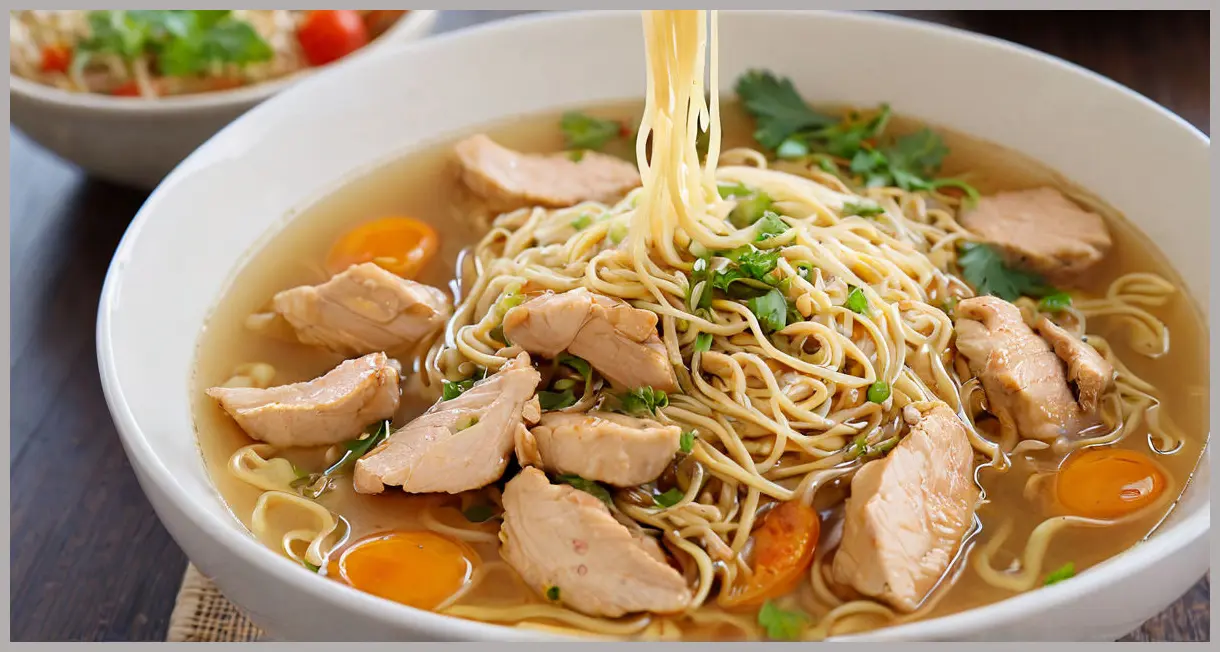
Serve: Carefully strip the chicken meat from the carcass and divide it among bowls. Ladle the hot stock over the chicken and noodles. Garnish with extra coriander leaves and lime wedges on the side.
Serving Suggestions & Variations
Classic Presentation
- Bowl: Serve the dish in a wide, shallow bowl to showcase the broth and noodles.
- Garnish: Add a few fresh coriander leaves, a lime wedge, and a drizzle of extra dark soy sauce if desired.
- Accompaniments: Pair with steamed jasmine rice or a side of stir‑fried vegetables for a complete meal.
Flavor Tweaks
| Variation | What to Add/Replace | Why It Works |
|---|---|---|
| Spicy kick | 1‑2 sliced fresh chilies or a teaspoon of chili oil | Adds heat that balances the sweetness. |
| Herbal depth | A handful of fresh basil or Thai basil | Provides a fragrant, slightly sweet note. |
| Protein boost | Add sliced shiitake mushrooms or tofu | Enhances umami and texture. |
| Vegetarian version | Replace chicken with seared tempeh or extra vegetables | Keeps the broth rich without animal protein. |
| Low‑sodium | Use reduced‑salt soy sauces and limit brown sugar | Makes the dish suitable for sodium‑restricted diets. |
Leftover Ideas
- Soup: Turn any leftover broth into a light consommé by adding a few slices of fresh ginger and a pinch of pepper.
- Stir‑fry: Toss leftover noodles, greens, and chicken into a hot wok with a splash of sesame oil for a quick stir‑fry.
- Rice bowl: Use the broth to poach a few rice grains, then top with the chicken, noodles, and greens for a hearty rice bowl.
Conclusion
Chinese Chicken with Noodles is more than just a comforting bowl of soup—it’s a celebration of technique, flavor, and cultural heritage. By carefully balancing sweet, salty, and aromatic elements, you’ll create a dish that’s both approachable for beginners and satisfying for seasoned cooks. The process of slow‑cooking the chicken, reducing the stock, and layering fresh aromatics teaches valuable cooking principles: patience, flavor layering, and the importance of fresh ingredients.
Whether you’re feeding a family, impressing guests, or simply treating yourself to a nourishing meal, this recipe offers a reliable, delicious outcome. Grab your ingredients, follow the steps, and enjoy the aroma that fills your kitchen as the broth simmers. Remember, cooking is as much about the journey as it is about the final dish—so savor each moment and relish the results!
Happy cooking, and may your kitchen always be filled with warmth, flavor, and the comforting scent of ginger and soy.


Leave a Reply