
Rhubarb and Custard Layer Cake
Difficulty: Easy
Portion: Cuts into 16 slices
Time: Hands‑on 60‑70 min, Oven 70‑85 min, plus cooling and setting
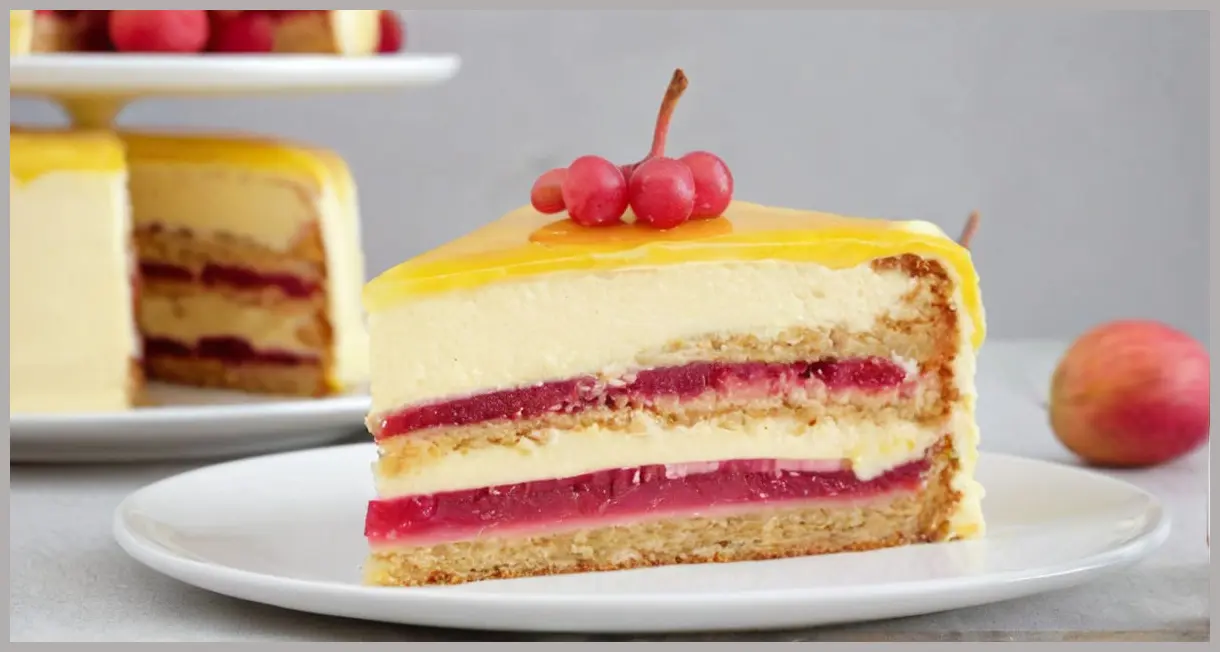
If you’re looking for an eye‑catching dessert that’s surprisingly simple to pull together, the Rhubarb and Custard Layer Cake is the perfect pick. Its bright green, translucent filling and crisp chocolate accents make it a show‑stopper for any special occasion—Easter, Mother’s Day, or a casual brunch that deserves a bit of extra flair.
Introduction
Cake lovers often search for that one recipe which balances rustic flavor with a polished finish. The Rhubarb and Custard Layer Cake delivers just that. The tartness of roasted rhubarb is tempered by rich, silky custard, while a creamy butter‑cream‑cheese glaze gives the whole thing luxurious texture. Whether you’re a beginner who’s just finished your first batter or an intermediate baker eager to add a new showcase recipe to your repertoire, this cake will satisfy a range of skill levels—especially because every step is straightforward, and the instructions are absolutely clear.
What makes this cake stand out is the thoughtful layering and decoration approach: Instead of a generic frosting, we use a luscious butter‑cream‑cheese mixture to keep the cake moist, and the chocolate “glass” created from melting truffles adds a subtle gloss that’s difficult to replicate with ordinary icing.

Meal Profile
| Feature | Details |
|---|---|
| Calories | Approx. 450 kcal per slice (depending on butter quantities) |
| Macros (per slice) | Carbs 34 g; Fat 24 g; Protein 5 g |
| Key Ingredients | Rhubarb, custard custard, butter‑cream‑cheese glaze, white chocolate truffles |
| Specialty | Layers of tart fruit, silky custard, and creamy buttercream; glossy chocolate finish |
Why Rhubarb Is the Star
Rhubarb’s distinctive acidity cuts through the richness of the custard and buttercream glaze, creating natural balance. Baking it at low heat with orange zest infuses subtle citrus notes that deepen the overall flavor profile. Even if you’re not a fan of tart veggies, the caramelized sugar coating during roasting gives the rhubarb a pleasantly sweet surface, making the entire cake approachable.

Ingredient Highlight
Below is a curated breakdown of all key components, along with quick hacks for beginners and optional substitutions. This is a carefully assembled list derived directly from the recipe’s full ingredient inventory.
Cake Base
- 250 g unsalted butter – softened plus extra for greasing
- 250 g caster sugar
- 1 tsp vanilla extract
- 4 large free‑range eggs
- 250 g self‑raising flour
- 3‑4 tbsp whole milk (add as needed to form batter)
Tip: Use finger‑pit method to test whether the batter has the right consistency—drop a spoonful; it should slide out with a slight trail.
Custard Filling
- 300 ml whole milk
- ½ tsp vanilla bean paste
- 3 large free‑range egg yolks
- 60 g caster sugar
- 45 g cornflour
- 200 ml double cream – whipped to peaks, then folded in
Tip: Whisk yolks and cornflour until pale. Slowly add hot milk, then return to heat—stir constantly so the custard thickens evenly.
Roasted Rhubarb
- 400 g forced rhubarb (cut into 5 cm pieces)
- 1 unwaxed orange (zest + juice)
- 125 g caster sugar
Tip: Keep the rhubarb in a single layer on a baking sheet to ensure even caramelisation.
Butter‑cream‑Cheese Glaze
- 125 g unsalted butter – softened
- 80 g icing sugar
- 100 g full‑fat cream cheese (room temperature)
- Squeeze of lemon or orange juice
Tip: For a lighter texture, add a tablespoon of heavy cream to the mixture and beat to a silky glaze.
Chocolate ‘Glass’ & Toppings
- 100 g Lindt white chocolate, chopped (shards)
- 200 g Lindt Lindor white chocolate truffles, chopped (for drizzling)
- Candied rhubarb (optional, see Tip)
- Foil, compostable paper, and a 0.5 cm nozzle piping bag
Tip: Chill the chocolate shards before spreading; it aids in crisp separation once set.

Step‑by‑Step Instructions
Below is a numbered list of every step extracted from the method array. Numbering helps you keep track of your progress, especially important when working with multiple components.
-
Preheat the oven to 180 °C / 160 °C fan / gas 4.
Beat the butter, sugar, and vanilla extract in a large mixing bowl until pale and fluffy. Add the eggs one at a time, beating well between each addition. Fold in the flour with a pinch of salt, adding 3‑4 tbsp whole milk as needed to form a smooth batter. -
Divide the batter between two 20 cm cake tins. Bake in the centre of the oven for 20‑25 min until golden and risen; a skewer inserted into the centre should emerge clean. Turn out onto a wire rack and let cool completely before slicing.
-
Make the custard filling: Heat the milk and vanilla bean paste in a small pan over low heat until it’s just simmering. Whisk the egg yolks, sugar, and cornflour together in a bowl. Slowly whisk in the hot milk, then pour the mixture back into the pan. Cook over medium heat, whisking, for 2‑3 min until thickened. Cover with slightly damp compostable baking paper (to avoid a skin). Cool. Whisk the double cream into peaks, then beat the custard to soften, fold in a dollop of cream for looseness, and fold in the remaining cream.
-
Roast the rhubarb: Heat the oven to 110 °C / 90 °C fan / gas ¼. Arrange the rhubarb in a single layer in a deep baking dish. Pare 3 strips of orange zest, slice them thinly, and add to the rhubarb with the orange juice. Sprinkle sugar on top and mix gently. Cover with foil and bake for 50‑60 min. Remove, uncover, and transfer the juices to a pan—bring to a boil for 5‑6 min until slightly reduced. Cool, then drizzle the reduced syrup back over the rhubarb.
-
Prepare the butter‑cream‑cheese glaze: Whisk butter and icing sugar in a mixing bowl until fluffy. Gradually beat in the cream cheese until the mixture is smooth—then add a squeeze of lemon or orange juice to taste.
-
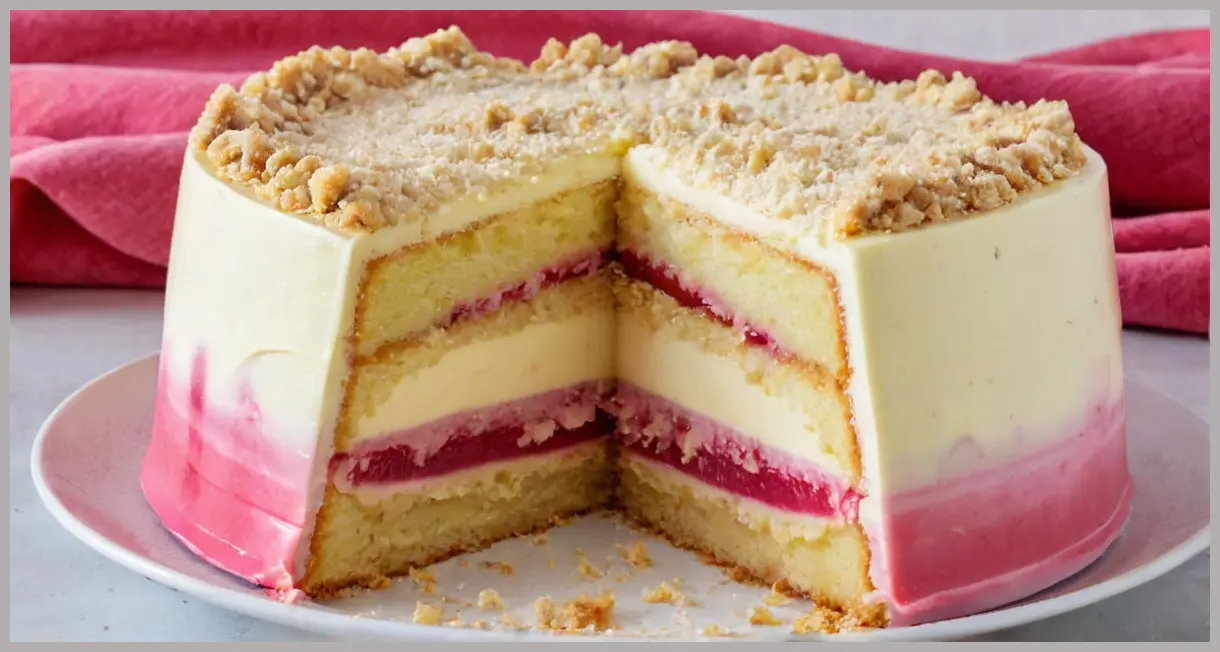
Assemble the cake: Place 1 tbsp butter‑cream on a serving plate. Slice each cake horizontally; place one half on the butter‑cream to lock in place. Spread 3‑4 tbsp rhubarb jam over the top of the cake, then pipe or spread ¼‑qt custard over the jam layer. Repeat the cake, jam, custard layers twice more. Top with the final cake half. Cover the cake with a thin layer of butter‑cream glaze, then chill until ready to decorate.
-
Create the chocolate ‘glass’: Melt the chopped white chocolate in a small, heat‑proof bowl set over a pan of barely simmering water. Do not stir. Spread the melted chocolate onto a lined baking sheet and leave to set. Once hardened, break into large shards. Melt the chopped truffle balls the same way and set them back on heat until slightly thickened (about 10‑15 min).
-
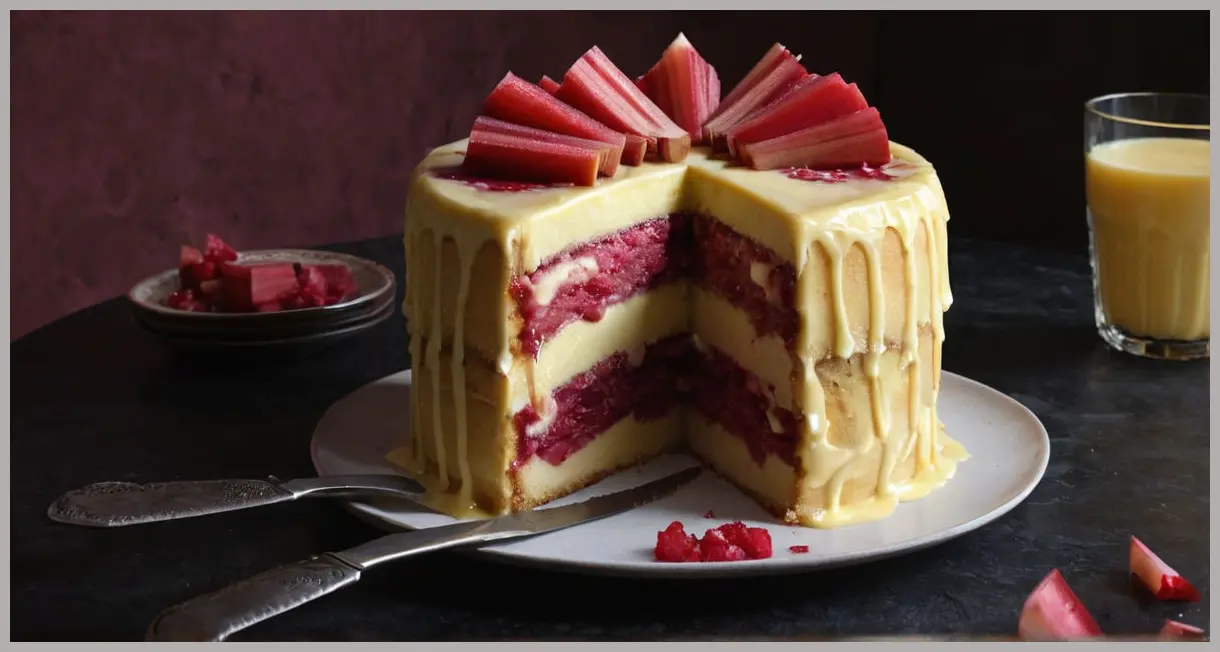
Decorate: Drizzle some melted truffles over the top of the assembled cake, encouraging a few drips down the sides. Spoon the remaining custard across the top, nestle in some roasted rhubarb, drizzle the melted truffles again, and scatter candied rhubarb and chocolate shards across the surface. Slice and serve with extra roasted rhubarb and sauce on the side, if desired.
Serving Suggestions & Variations
Classic Presentation
For a formal event, finish the cake with a dusting of cacao powder and a few fresh mint leaves. Serve on a brightly glazed plate to contrast with the cake’s muted tones, and accompany each slice with a small cup of freshly squeezed orange juice.
Make‑Ahead and Storage
The cake slices hold beautifully when wrapped in parchment or foil and stored in the refrigerator for up to 3 days. To reheat: place on a baking sheet and warm in an oven set to 120 °C for 10 min, then let rest at room temperature.
Taste Tweaks
| Modification | How to Execute |
|---|---|
| Bolder Sweetness | Increase the jam to 5 tbsp per layer or use a raspberry jam for an added pop of color. |
| Chocolate Depth | Substitute the white chocolate with dark chocolate or add a drizzle of chocolate ganache. |
| Acidic Edge | Add a tablespoon of sloe gin syrup to the custard for a nuanced finish. |
| Nutty Layer | Melt 50 g of almond butter into the butter‑cream glaze for subtle crunch. |
Dietary Variations
- Gluten‑Free Version: Replace self‑raising flour with a 1:1 gluten‑free blend.
- Lactose‑Free: Use dairy‑free alternatives for both the soda/water and the custard: coconut milk, oat milk, and a lactose‑free double cream.
- Low‑Sugar Option: Swap caster sugar for a sugar‑substitute, adjust custard thickness accordingly, and reduce jam quantity.
Conclusion
The Rhubarb and Custard Layer Cake offers a remarkable blend of textures and flavors that will impress even the most critical palates. Its “DIY” chocolate finish and crafty layering allow novice bakers to master key techniques—baking a sponge, creating custard, and designing glaze—without being overwhelmed by complexity.
Whether you’re preparing for a family gathering or simply enjoying a quiet Sunday afternoon, this cake delivers storyline, contrast, and visual allure. Grab the ingredients, follow the straightforward steps, and experience how a humble fruit like rhubarb can sparkle on a truly exquisite dessert canvas. Enjoy every slice!


Leave a Reply