
Lemon and Strawberry Meringue Cake
The Ultimate Show‑stopper for Every Kitchen Skill Level


Introduction
If you’ve ever dreamed of crafting a cake that combines the bright tang of fresh lemons, the sweet blush of ripe strawberries, and the airy elegance of a perfectly glossy meringue crown, then you’re in for a treat. The Lemon and Strawberry Meringue Cake is more than just a dessert; it’s a theatrical center‑piece that will make your guests gasp the first time they see it rise. Whether you’re a beginner who enjoys experimenting with bright flavors or an intermediate baker looking for a new challenge, this recipe’s “Easy” difficulty rating has you covered.
What sets this cake apart isn’t only the visual drama; it’s a harmony of textures and flavors that marry buttery layers, citrusy curd, silky cream, juicy berries, and a caramel‑glazed meringue. It’s a cake that serves 12‑14 people—perfect for brunches, afternoon teas, or a festive holiday gathering. In less than a day, you’ll have a showstopper that looks like it was lifted straight out of a magazine spread.
Let’s dive into the details: the nuances of the ingredients, the step‑by‑step method that keeps the dish simple yet impressive, and some variations to keep the recipe fresh for future occasions.
Meal Profile
- Title: Lemon and Strawberry Meringue Cake (focus keyword)
- Difficulty: Easy – ideal for those looking to expand their baking repertoire without diving into complicated techniques.
- Portion: Serves 12–14 – excellent for sizable gatherings.
- Time:
- Hands‑on time: 45 minutes
- Oven time: 1 hour 20 minutes
- Extra cooling: varies
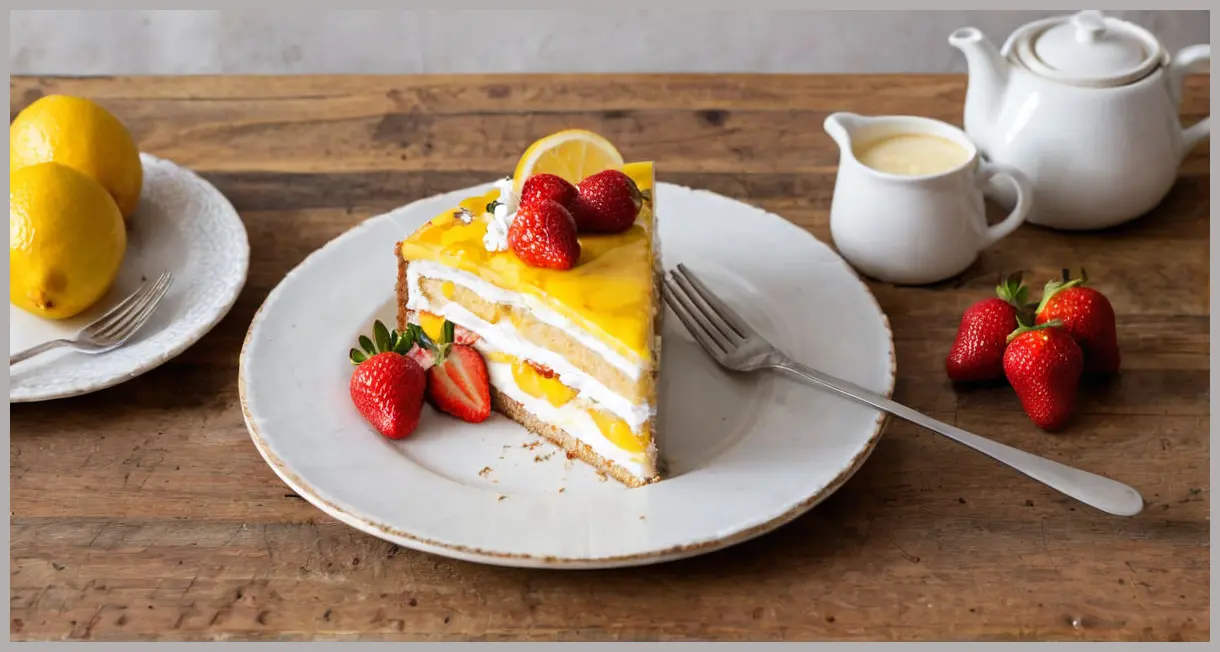
- Description: Expect gasps when you unveil this gloriously OTT strawberry cake. The three layers are sandwiched with lemon curd, berries and cream, then topped with a strawberry meringue crown.
The cake’s construction—three dense, moist layers interwoven with fresh lemon curd, rounded cream, and fruit—is simply industrial‑grade decadence in a format that still feels approachable. Each component is made from scratch, and the entire project – except the final assembly – takes under a couple of hours.

Ingredient Highlight
The ingredient list for this masterpiece may feel like a pantry pilgrimage, but every item plays a pivotal role in balancing taste, texture, and presentation. Below, we break each component down, highlighting why each is essential, and offering optional swaps should you be cooking for specific dietary needs.
| Ingredient | Role | Tips & Variations |
|---|---|---|
| 250 g unsalted butter (room temperature) | The base of the cake batter; provides richness, leavening interaction, and a tender crumb. | For a lighter version, replace with neutral oil (e.g., refined sunflower). |
| 250 g golden caster sugar | Sweetens the batter and assists in developing the cake’s crumb texture and browning. | Substitute with superfine sugar if your butter contains grains. |
| 1 Tbsp vanilla extract | Adds aromatic depth; balances the acidity of lemon and the sweetness of strawberries. | Use organic vanilla bean paste for a stronger flavor. |
| 4 medium free‑range eggs | Acts as the main binder and leavening source; eggs should be at room temperature for better emulsion. | Replace one egg with a “flax egg” (1 Tbsp ground flaxseed + 3 Tbsp water) for a vegan twist. |
| Zest & juice of 1 lemon | Brings natural brightness and acidity to the batter and curd. | For a more citrusy punch, add a teaspoon of bottled lemon curd. |
| 230 g plain flour | Carries the batter, providing structure. | Use cake flour for an even fluffier crumb. |
| 1 tsp salt | Enhances flavor balance. | Low‑sodium flour can be used to adjust. |
| 2 tsp baking powder | Helps the batter rise gently; pairing with the leavening action of eggs for a pristine rise. | Tighten the bake by reducing to 1 tsp, if you prefer a denser cake. |
| 3 medium free‑range egg yolks + 1 whole egg | The centerpiece of the lemon curd; yolks provide richness and curd thickness, while the whole egg acts as a stabilizer. | Use pasteurized eggs to reduce health risk when cooking at home. |
| 100 g caster sugar | Sweetens the curd uniquely. | Use light brown sugar for a deeper, molasses note. |
| Juice of 2 lemons | Intensifies the curd’s bright citrus profile. | Substitute 1 lemon’s juice with lime for an alternate citrus profile. |
| 75 g butter (cubes) | Integrated into the curd as a custard binder, adding glossy sheen. | Melted coconut oil can replace butter for dairy‑free version. |
| 300 ml double/whipping cream | Provides silky, airy fluff to each cake layer. | Vegan heavy‑cream alternatives (coconut or cashew cream) work. |
| 300 g strawberries (hulled & sliced) | Adds freshness and juicy bursts between layers; the unhulled berries reserved for the crown add juiciness and visual impact. | Use mixed berries (raspberry, blueberry) for seasonal variety. |
| Oil to grease | Prevents the springform tins from sticking. | Use a high smoke‑point oil such as grapeseed. |
| 3 medium free‑range egg whites | Essential for the meringue crown; provide structure and stability. | For a vegan spin, cook meringue with aquafaba (chickpea slurry). |
| 165 g caster sugar | Sweetens and macerates the meringue into a glossy, caramelized top. | Reduce sugar by 10 % to lower overall sweetness if preferred. |
| Pink or red food colouring | Gives the classic strawberry hue to the meringue crown. | Opt for natural beet juice for an organic alternative. |
| 2 Tbsp freeze‑dried strawberry pieces | Infuses the meringue with strawberry flavor and unique fiber bursts. | Replace with dried raspberry or blueberry. |
| 3 x 18 cm springform cake tins (lined) | The foundation of each cake layer; springform allows structured, collar‑free lifts. | Use round cake tins if springform isn’t available—just avoid the collar. |
Tip: The precise measurement of each ingredient matters. Bakers know that a difference of just a few grams in sugar or flour can shift the entire textural balance.
Step‑by‑Step Instructions
Below you’ll find a concise, numbered guide that takes the guesswork out of baking. Each step outlines a key action, focusing on timing, technique, and what to observe as you go.
1. Prepare and Bake the Cake Base
- Preheat oven to 160 °C fan (or gas 4).
- In a large mixing bowl, beat the 250 g unsalted butter and 250 g golden caster sugar together until light and fluffy.
- Add the 1 Tbsp vanilla extract, then add the 4 medium eggs one at a time, beating well after each addition.
- Stir in the grated zest and juice of 1 lemon.
- Gently fold in the 230 g plain flour, 1 tsp salt, and 2 tsp baking powder until just combined.
- Divide the batter evenly among the lined spring‑form tins and level the tops.
- Bake for 20 minutes or until a skewer inserted into the center comes out clean.
- Transfer the tins onto a rack to cool completely.
- After the cakes have cooled, remove them from the tins. Reduce oven temperature to 120 °C fan (or gas 1) for the next stage.
Why this matters: Utilizing the fan oven ensures even baking and a uniform rise, vital for a consistent crumb structure that can support future layers.
2. Make the Fruit‑infused Lemon Curd
- Whisk together 3 medium egg yolks, 1 whole egg, 100 g caster sugar, and the juice of 2 lemons in a small saucepan.
- Cook over low‑medium heat, whisking continuously until the mixture begins to thicken.
- Once it starts to steam, gradually whisk in the 75 g cubed butter one cube at a time until the mixture is thick and the butter is fully integrated.
- When the curd’s consistency resembles that of whipped cream, remove from heat.
- Pass the curd through a sieve into a clean bowl and let it cool completely.
Low‑temperature cooking is critical to avoid curdled texture and to achieve a silky smooth final product.
3. Whip the Meringue Crown
- Line a baking tray with parchment paper and place an oiled spring‑form ring on top (do not include the base).
- Whip the 3 medium egg whites to soft peaks per your own metric or a reliable recipe guide (soft peaks should hold their shape but bend).
- Add half of the 165 g caster sugar; beat for 5 minutes.
- Add the remaining sugar and continue beating for another 5 minutes until the meringue is glossy, sterile, and the sugar has dissolved.
Tip: Use a large, clean whisk or the beaters of a stand mixer; residual yolk fat can inhibit meringue rise.
4. Colour the Meringue
- Sprinkle a few drops of pink or red food colouring into the meringue.
- Add the 2 Tbsp freeze‑dried strawberry pieces.
- Gently fold in the meringue using a tablespoon in 3–4 distinct folds to keep the leavening structure intact while creating a ripple effect.
This step not only adds colour but also introduces a subtle strawberry flavor to the meringue.
5. Bake the Meringue Crown
- Spoon the coloured meringue onto the lined tray, using the spring‑form ring to guide the size.
- Leave about a 2 cm gap around the edges—this prevents the meringue from touching the tin that it will rise from.
- Bake for 1 hour, then turn off the oven and leave the crown inside for 30 minutes with the oven door ajar to cool slowly.
- Remove from the oven, allow to cool to room temperature, and detach the ring using a sharp knife to avoid marring the surface.
Slow cooling curbs cracking and maintains the glossy sheen.
6. Assemble the Final Cake
- Whip 300 ml whipping cream into soft peaks that flop over when the whisk is lifted.
- Place one cake layer on a cake stand; spread one third of the cooled lemon curd evenly over it.
- Add a generous layer of whipped cream and half of the sliced strawberries (reserve the rest for the top).
- Repeat by adding the second cake layer and another third of curd, concluding with the remaining cream and berry slices.
- Cap with the third cake layer and the rest of the curd.
- Place the meringue crown on top of the final layer.
- Dot the crown with the remaining lemon curd and garnish with the reserved whole strawberries for a stunning finish.
Finally, serve the cake in slices, mirroring the sunset‑gold hues of a warm summer afternoon.

Serving Suggestions & Variations
Classic Presentation
- Slice each layer horizontally and serve on a pedestal stand so the crown is visible from all angles.
- Use a fine‑tooth spatula to ensure the curd remains intact during serving.
Seasonal Tweaks
| Season | Substitution Ideas | Why It Works |
|---|---|---|
| Spring | Replace strawberries with fresh raspberries or wild blueberries | Lacteous fruit pairs with lemon curd beautifully. |
| Summer | Add a pinch of mint to the cream for a fresh lift | Cuts through the richness of the butter. |
| Fall | Swap lemons for tangerines & orange zest for a warm citrus mix | The deeper flavor lends itself to apple or pumpkin additions. |
| Winter | Use cranberries or pomegranate seeds – add a dash of vanilla salt | The tartness balances smoky, spiced cakes. |
Diet‑Friendly Variations
| Diet | Suggested Changes |
|---|---|
| Gluten‑Free | Use a high‑quality gluten‑free plain flour blend (shop as a 1:1 substitute). |
| Vegan | Substitute eggs with flax or aquafaba; replace butter with coconut oil; use a tofu‑based lemon curd. |
| Keto | Replace caster sugar with erythritol or stevia; use almond flour (reduce portion description). |
| Dairy‑Free | Substitute whipping cream with coconut cream; use dairy‑free butter or margarine. |
Patience is paramount. Let the lemon curd cool entirely before layering; this avoids a “melting” effect on the cake’s outer edge during transport.
Conclusion
There is an art to balancing bright lemon aromatics, sweet strawberry generosity, and delicate meringue precision. The Lemon and Strawberry Meringue Cake steps you through each layer of complexity while still making it approachable for seasoned hobbyists. The recipe’s “Easy” label is generous—there are only a handful of distinct stages and no hard‑to‑find ingredients.
When you finish, you will have not only a charming, dramatically frosted cake but also a set of techniques you can re‑apply to pâtisserie, curd making, and meringue crafting. So gather your supplies, trust the process, and let the oven produce the show‑stopper you’ve been craving. Your guests will literally wait for the first slice, and you’ll have earned bragging‑rights for a decade!
Happy baking—and cheers to many delicious memories with your Lemon and Strawberry Meringue Cake!


Leave a Reply